
Review: SEK ‘Wallensteins Garage’
Sometimes, three musicians, a wall of sound, and the freedom to improvise are all you need, and Berlin’s instrumental power trio, SEK, understands this perfectly.
On their debut album, Wallensteins Garage, guitar, bass and drums take centre stage, embarking on extended musical journeys where heavy riffs, hypnotic grooves and psychedelic detours take precedence, allowing the trio to explore their own musical paths without restrictions.
SEK consists of guitarist Paul-Willy Stoyan, bassist Lucas Kazzer and drummer Georg Edert. What I particularly appreciate about this setup is the freedom it offers. Without vocals dictating the direction, the three musicians can follow their instincts, respond to one another and allow the music to develop naturally. Their sound moves between psychedelic rock, progressive rock and heavier, more experimental territory, bringing together the hypnotic grooves of krautrock, the expansive spirit of ‘70s psychedelia and occasional hints of doom and drone.
If you appreciate the adventurous approaches of Can, NEU! and Hawkwind, there is plenty here to enjoy, although SEK bring their own personality to these familiar musical landscapes. Their previous experiences in bands including Gavial, Elder, Gaffa Ghandi, Jacke Schwarz and Borders Down also help explain the variety of influences at work.
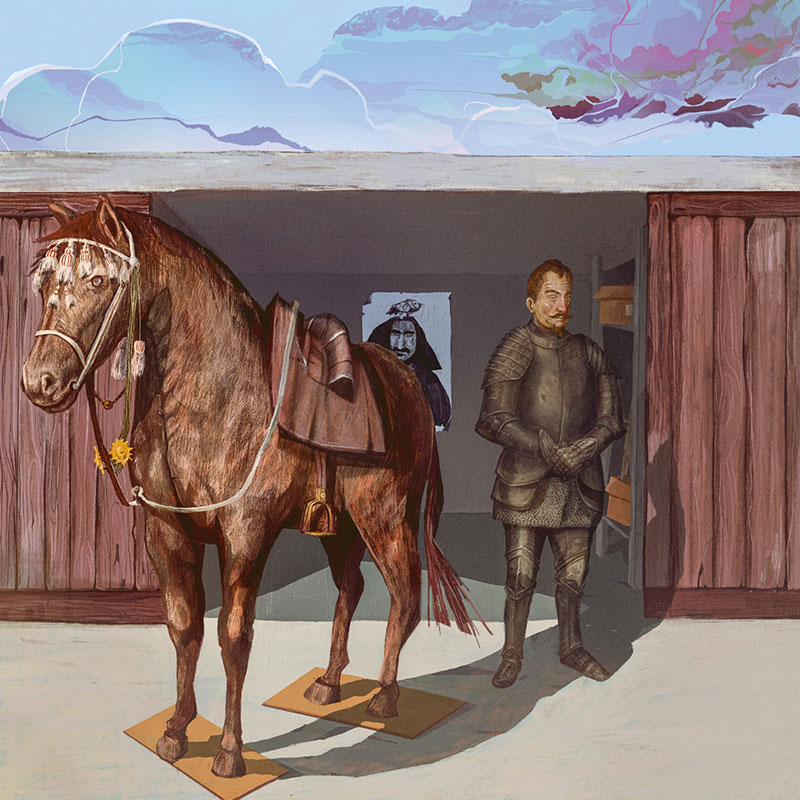
I must also mention the album cover, whose old-time appearance immediately appeals to me. Its vintage character contrasts beautifully with the fuzzy, exploratory rock within, giving the record a distinctive personality before the music even begins.
The concept behind Wallensteins Garage is equally unusual. Inspired by Albrecht von Wallenstein, the seventeenth-century military commander, SEK imagine him restoring the taxidermied remains of his beloved horse, Amore Mio, in his garage. It is a wonderfully bizarre idea, combining historical references with surreal humour. The band’s tongue-in-cheek description of their music as Historian Oriented Rock makes me smile. This eccentric narrative gives the instrumental compositions a loose storyline without restricting the trio’s musical freedom.
The opening title track, Wallensteins Garage, is the first of the album’s two longest pieces, running for more than ten minutes. From the very first note, they establish a slow-moving groove that draws you into an ethereal atmosphere. Stoyan‘s guitar takes centre stage, exploring bluesy, space-rock territory with an enchanting fluidity. Expansive guitar work, hypnotic grooves and subtle rhythmic interplay gradually draw you deeper into the trio’s world. It is an inviting introduction to an album that favours atmosphere, sonic exploration and instrumental improvisation over conventional musical structures.
The mood changes with Die Schlacht Bei Lützen (The Battle of Lützen), named after the historical conflict of 1632. The pace becomes more driving, and the music takes on a darker, more sombre character. There is a greater sense of urgency here, with the heavier sound evoking something of the tension and drama associated with the battle. I particularly enjoy how they convey these impressions through instrumental interplay, leaving you free to imagine the events rather than presenting them too literally.
Expansive guitar work, hypnotic grooves and subtle rhythmic interplay gradually draw you deeper into the trio’s world…
Amore Mio is a splendidly lively moment, bringing you closer to the eccentric heart of the album’s narrative. The title is an affectionate Italian expression meaning ‘My Love,’ adding a romantic dimension to Wallenstein’s relationship with his beloved horse. A musical motif that evokes the movement of a horse gives the piece a distinctive character, while the fuzzy, distorted guitar connects it to the psychedelic rock tradition I particularly enjoy. Beneath the playful energy and surreal humour, there is also something unexpectedly touching about the suggestion of affection, memory and loss.
Auftritt Zu Pappenheim (Appearance at Pappenheim) is the album’s second extended composition, offering a warm, richly textured excursion with subtle jazz-rock undertones. Guest musician Fabien de Menou adds keyboards, broadening the sound and introducing further colour to the arrangement. Moving between heavy riffs and more atmospheric passages, it allows their ideas to develop without haste. I particularly enjoy the sweeping quality of this piece, where the combination of guitar, bass, drums and keyboards creates an immersive musical journey.
The closing track, Amore Mio Ende (The End of Amore Mio), revisits the earlier composition from a more experimental and sombre perspective. It opens with the unmistakable sound of a mandolin, introducing a quasi-classical folk character that immediately sets it apart from the heavier passages found elsewhere on the album. There is something delicate and almost old-world about this beginning, as if the music were setting the scene for a final, melancholic chapter in Wallenstein’s strange story.
Gradually, the composition gathers momentum before returning to a slower, more measured pace, allowing its atmospheric qualities to come to the fore. The tolling of a funeral bell provides an evocative and rather haunting conclusion, bringing the album’s eccentric narrative to an end. This is perhaps the trio’s most experimental piece, combining its unusual folk-like opening with darker textures and an underlying sense of loss. It is a fitting farewell to Wallenstein and his beloved Amore Mio, bringing their peculiar story full circle with a poignant and unexpectedly moving final touch.
What I appreciate most about SEK is their willingness to let the music breathe. They understand the power of a good riff but are equally prepared to take it somewhere unexpected. The combination of psychedelic colour, krautrock grooves, progressive exploration and heavier passages gives Wallensteins Garage a character of its own. The extended compositions require a little patience, but that freedom to explore is precisely where much of the album’s appeal lies.
This is an intriguing debut from a band with a genuine affection for the more adventurous side of rock music. The vintage artwork, eccentric historical concept and varied musical influences all contribute to its identity. SEK may not be reinventing instrumental rock, but they bring enough personality, imagination and musical curiosity to make this a rewarding experience. If you enjoy your rock heavy, psychedelic and unafraid to wander beyond familiar territory, this album is well worth exploring.
Label: Exile On Mainstream Records
Band Links: Facebook | Bandcamp | Instagram
Scribed by: Domenico ‘Mimmo’ Caccamo