Review: Jaberdarwin ‘The Soft Collapse’
When a supergroup brings together veterans from bands like Porcupine Tree, Motorpsycho, Zu, and Sigillum S, it is easy to expect a clash of giant egos or an overly calculated technical flex session. Instead, Jaberdarwin’s debut album, The Soft Collapse, delivers something far more nuanced, hypnotic, and devastatingly cohesive. Formed in London, the project brings together four distinct visionaries from the outer fringes of avant-garde and progressive music: guitarist Eraldo Bernocchi (Sigillum S, Metallic Taste of Blood), bassist Colin Edwin (ex-Porcupine Tree, O.R.k.), drummer Tomas Järmyr (ex-Motorpsycho, Zu), and bass clarinettist Gareth Davis.
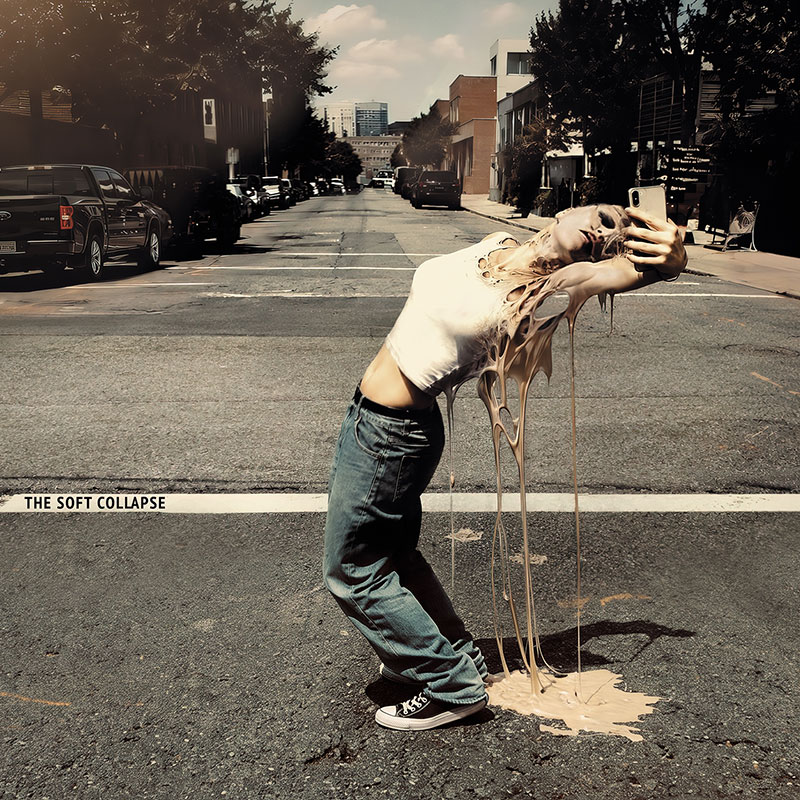
Rather than assembling to trade flashy solos or smooth down their stylistic edges for accessibility, this experimental supergroup came together with a clear mandate: to let their vastly different sonic worlds collide head-on. By merging heavy metal weight, ambient drone, dub-inflected sub-bass, and free-jazz wind textures into the same acoustic cauldron, Jaberdarwin avoids comfortable genre compromises entirely. The result is a six-track suite that feels less like a traditional record and more like an immersive, slow-motion study in sonic decay, landing squarely at the intersection of dark-jazz, industrial noise, and avant-garde soundscapes.
The tone is set instantly by the cold, crawling opening salvo, Arctic Anthill. Rather than bursting out with aggressive noise or loud riffs, the track opens in a vast, frozen expanse, letting sparse, breathy bass clarinet phrases from Davis drift across a chilled haze of Bernocchi‘s ambient guitar swells and subtle electronic drone. As it slowly develops, drummer Järmyr and bassist Edwin begin to weave a slow-building, mechanical pulse that mimics the frantic, highly organised activity of an anthill trapped beneath a thick sheet of ice.
Just as this hypnotic rhythmic loop threatens to lock into a predictable pattern, distorted bass swells, and harsh industrial textures erupt from beneath the surface, shattering the stillness without ever breaking the track’s rigid sense of restraint. It is a masterclass in slow-burn pacing that establishes the record’s spatial architecture and sets an exceptionally high bar for what follows.
Throughout the album, the true catalyst that defines the collective’s unique sonic footprint is the bass clarinet. Rather than sitting on top of the arrangements as a conventional, soaring lead instrument, the wind textures slither directly through the heavy distortion and low-end frequency space. Davis’ performance adds a noir-ish, dark-jazz sensibility that feels simultaneously haunting, claustrophobic, and refined.
The genius of the record also lies in how these woodwind textures interact with the rhythm section. On the title track, The Soft Collapse, the band perfectly encapsulates their chosen moniker – striking a fragile, precarious balance between delicate, lingering melodies and sudden, overwhelming sonic weight. Here, the guitars turn into looming, metallic fogbanks, while the subterranean basslines ensure the music stays grounded. The composition never feels overcrowded; rather than four distinct soloists competing for airtime, Jaberdarwin functions as a single, breathing organism operating with singular intent.
where avant-garde freedom and heavy atmospheric dread collide with surgical precision…
The album’s midsection pushes this collective chemistry into even darker territory with The Great Devourer. True to its title, it is built around a heavy, consuming groove where the percussive attack becomes increasingly physical and unpredictable. Rather than providing a straightforward beat, the drums accent the spaces between the thick, rhythmic pulses, creating a sense of momentum that feels both unstoppable and unstable. Over this relentless foundation, Bernocchi and Davis engage in a tense call-and-response, contrasting scraping metallic textures against low, resonant reed hums. It is one of the record’s most oppressive moments, showcasing how effectively the quartet can build a wall of sound without sacrificing detail or dynamic depth.
Side B opens with a crucial structural pivot point in Skimism. Where the record’s first half leans into dense, suffocating soundscapes, here it feels noticeably leaner, more athletic, and sharply focused on nimble dynamic interplay. Built around the taut, dub-inflected bassline and the erratic, shimmering cymbal work, the track relies on subverting listener expectations at every turn. The clarinet plays directly off the gritty, scraping guitar accents, darting between free-jazz dissonance and fleeting, haunting melodic hooks. It captures the quartet at their most agile – skimming across deep sonic chasms while balancing raw avant-garde improvisation with an underlying, kinetic momentum that propels the second half of the record forward.
This momentum flows seamlessly into Unmapped Currents, a track that highlights the group’s mastery of space and acoustic drift. The heavy industrial crunch recedes slightly to make room for sweeping cinematic textures. The interaction between the ambient guitar loops and warm, melodic bass phrasing gives the piece an oceanic quality, evoking the feeling of drifting through uncharted, pitch-black waters.
By the time the album winds down to its sprawling finale, Tectonic Lullaby, the crushing noise yields entirely to a meditative yet deeply eerie atmosphere that leaves a lasting chill. The track gradually dismantles the rhythmic structures established earlier, leaving behind lingering bass frequencies and dying clarinet notes that slowly dissolve into silence.
Rather than following usual album dynamics, The Soft Collapse unfolds like a dark, turbulent ecosystem where avant-garde freedom and heavy atmospheric dread collide with surgical precision. Jaberdarwin crafts an unsettling, highly disciplined listening experience that feels alive, unpredictable, and deeply hypnotic. For listeners drawn to the dark-jazz melancholy of Bohren & der Club of Gore, the crushing industrial textures of Sigillum S, or the expansive reaches of avant-garde prog, this debut stands as a powerful, uncompromising achievement.
Label: Subsound Records
Band Links: Bandcamp | Spotify
Scribed by: Domenico ‘Mimmo’ Caccamo