Review: Ramblin’ Ricky Tate ‘The Magnolia Sessions’
The latest series of Anti-Corp’s wonderful The Magnolia Sessions continues to deliver the goods in terms of shining a light on bluegrass, dark country, and folk singer-songwriter acts that are slightly off the beaten track. From Cooper McBean and The Bandit Queen of Sorrows to Chris Emmert, Dan Emery’s keen ear has invited another stellar set of artists to the Anti-Corp/Black Matter Mastering headquarters in Nashville. Here, they sit under the large magnolia tree to deliver a stripped-down, intimate set of acoustic numbers that tug at the heartstrings.
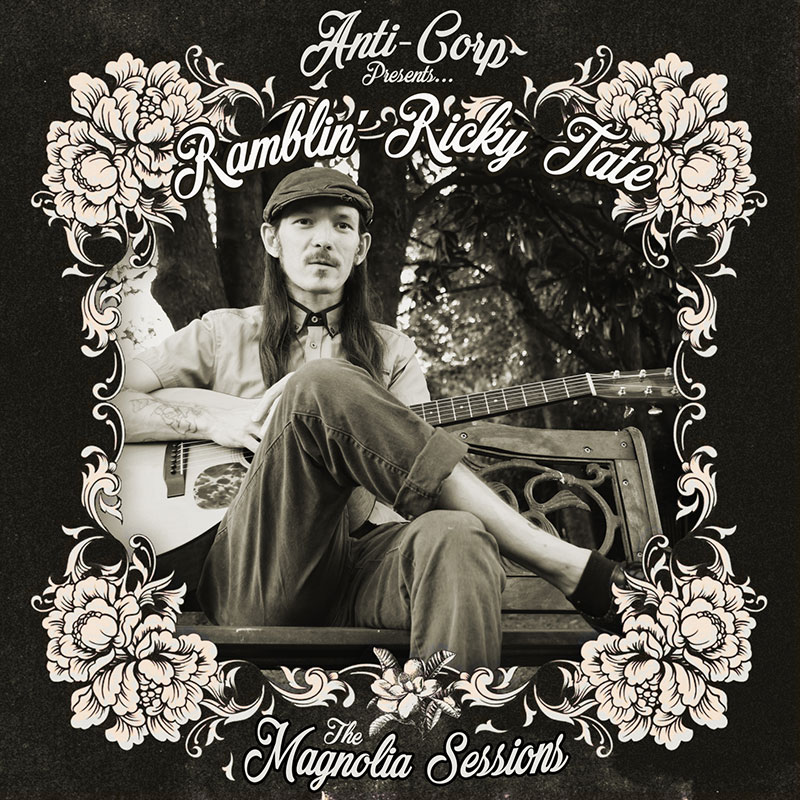
This particular release turns its attention to Ramblin’ Ricky Tate, a folk and country singer from Birmingham, Alabama. His stock-in-trade is blending heartache and spiritual struggles that are as old as time with a modern life experience. Having honed his skills busking on the streets of New Orleans, he developed an appreciation for old-world music. He established a jug band, toured the country, and mixed old pre-war folk songs with his own insightful songwriting, colouring the traditional with a gothic-tinged sense of darkness.
This session came about incredibly quickly and, according to Emery, was a success, with Tate being ‘dialled in’ and acing all his tracks within a take or two in a process the artist found highly rewarding and enjoyable. Comprising eight tracks in just twenty-six short minutes, there is no fat on the recording; it immediately pulls you into the dark, fire-lit setting as summer insects chirp in the background.
Opening with the strains of Drifting, a heartfelt tale of homesickness, lost love, and the solace found at the bottom of a whisky bottle, Tate strums his guitar with a jaunty, lopsided knowing that speaks of existing in the face of tragedy. Having shunned the advice of his lady, he sings of drifting ‘down that river of whiskey’, further from his love.
In the chord changes, you can feel him reach for hope and fall short; the musings are self-aware, longing for days lost and wishing for a different outcome yet resigned to the fate he has made for himself. Tate’s voice is cracked with a southern twang that helps carry the light-heartedness of the track, yet there are flashes of vulnerability and wistful regret. This realisation of regret is a demon that sits on his shoulder, just out of reach of the dancing fire and noisy crickets.
The rapid picking of July June Bug belies its roots as a southern gothic folk song. Over the fast-plucked strings, Tate remains in his usual conversational tone, which shields the listener from the full impact of his lyrics. The loose nature of his sound, coupled with the laid-back, raw setting, feels disarming given the heavyweight emotional recall of the tracks. Ultimately, this easy-going philosophy lesson has an all-too-human touch.
The title of Catch Some Hell lets the mask slip momentarily, bringing some real darkness. Over a slower groove, complete with the sound of knuckles rapping on the guitar, he sings on the themes of devils and the afterlife. He presses on towards his inevitable destination, resigned to his fate for ‘playing those devilish games’. Moodier than the previous tunes, this feels like the comedown of a whiskey binge and the hungover dawning of reality.
blending heartache and spiritual struggles that are as old as time with a modern life experience…
Pausing for a brief introduction before Tangled String, Tate describes the toe-tapping, bruising folk number as ‘like having your heart ripped out and wrung out like a dishrag’. Yet, despite this sombre and anguished tale, a gallows-humour tone runs throughout, with a bouncing back-and-forth that leans into the unconventional delivery that marks him out as a top-notch songwriter.
Devil’s Due features intense, low picking and continues the sombre vibe. It is a more obviously downbeat number about real heartbreak, representing Tate at his most bleak. As the shadows stretch from the darkness, he actively embraces them with a gothic style that comes right to the forefront. His voice feels stripped of hope, the cadence of the vocals contrasting beautifully with the intricately picked patterns.
Shying away from those more abrasive edges, Blood Or Wine is slower and emotionally dripping with mournful sentiment. The heavier downstrokes of the guitar emphasise the peaks and troughs of the story; as he stretches the vocal notes, you can almost picture him on that summer’s evening, eyes closed as the catharsis pours out.
The Witch harks back to the old-school country storytelling tradition and tips its hat to the jug-band style. Given his busking background and treks across the country, there is a feeling that this frenetic number could have been informed by every nook and cranny he toured, drawing together strands from the roots of music tightly held in communities across the south. Toe-tapping and disarming with its charm, Tate pulls you into this fireside tale.
Words You Can Say brings the curtain down on the session with a heritage blues feel. It is a classic story of love: boy meets girl, they fall in love, and she dies just as they are due to be married. Despite this bleakness, Tate remains true to his gentle, empathetic style, which makes the tragedy all the more devastating.
This entry into the canon of The Magnolia Sessions may not trouble any run times, being among the shorter releases they have put out, but he stands front and centre for the uninitiated by simply being honest and true to himself. There is no driving need for him to hammer out as much material as possible with an agenda; here, Ricky does ramble, taking his time and baring his soul. It is an interesting path to follow, where the journey feels just as valid, if not more so, than the destination.
Label: Anti-Corp Music
Band Links: Official | Facebook | Bandcamp | Spotify | Instagram
Scribed by: Mark Hunt-Bryden